The Red Cross celebrates and promotes equality.
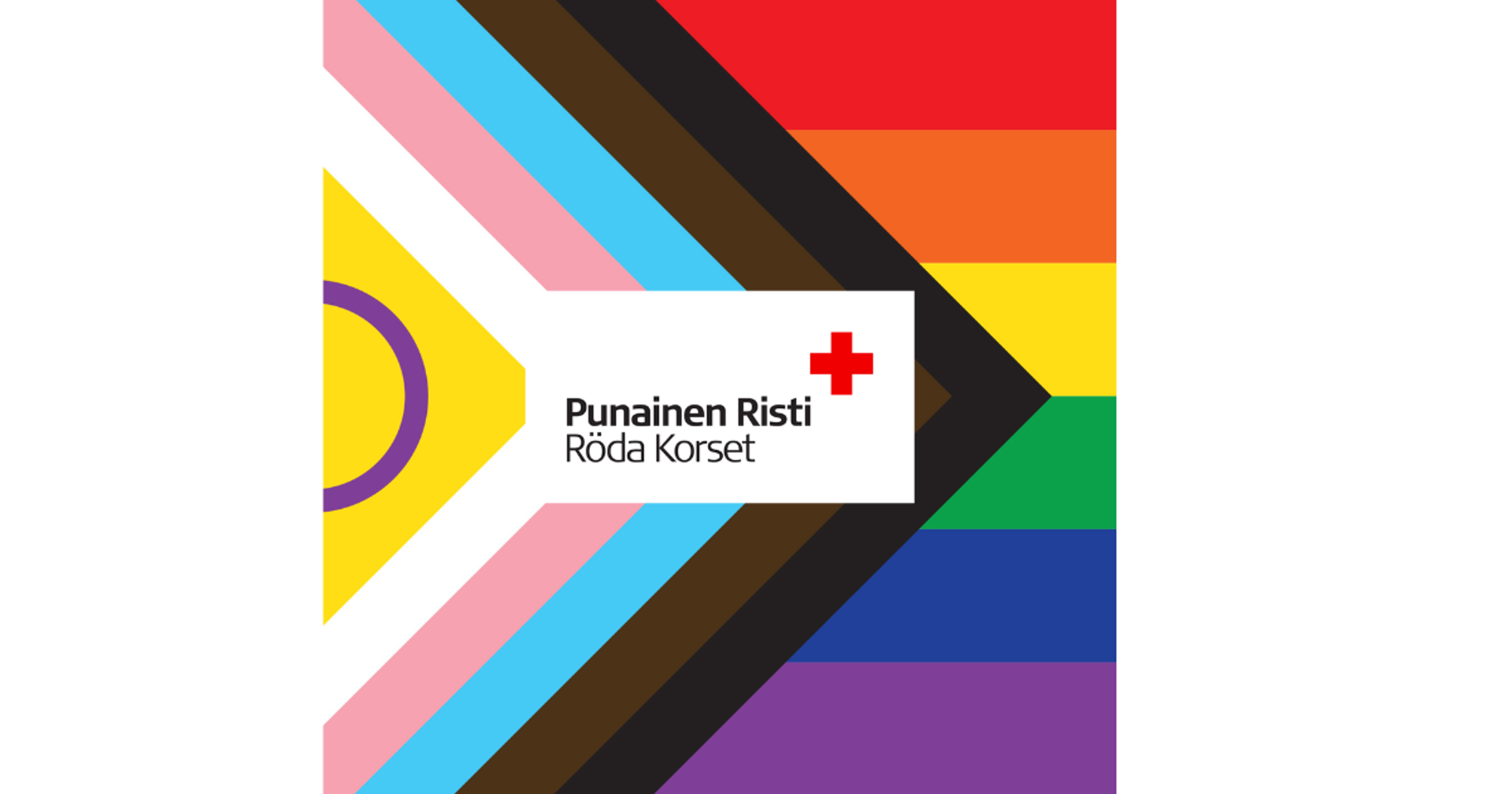
In June, the Finnish Red Cross celebrates Pride Month, providing an important opportunity to amplify the voices of sexual and gender minorities.
Although the rights of LGBTQ+ people have advanced significantly in recent decades, the topic remains highly relevant today. According to the European Union Agency for Fundamental Rights (FRA) 2024 survey, many people belonging to sexual and gender minorities continue to face discrimination, harassment, and violence in their daily lives. This highlights the need for ongoing efforts to promote equality and inclusion.
The term LGBTQ+ people refers to individuals who belong to sexual and/or gender minorities. This is not a single, uniform group, but rather a diverse community of people with different identities and experiences. What many share, however, is that societal norms do not always recognize or take their identities into account, which can affect their sense of belonging and safety.
LGBTQ+ individuals are part of the Red Cross community in many roles, including people we support, volunteers, elected representatives, and staff members.
Everyone has the right to belong to a community where they are seen, heard, and accepted as they are. Red Cross activities should be open to all, regardless of sexual orientation or gender identity.
This commitment is reflected in the Red Cross’s seven Fundamental Principles, particularly Humanity and Impartiality, which emphasize that no one should face discrimination and that everyone has the right to be treated with dignity and respect.
Equality, however, is not achieved through principles alone. It is built through everyday interactions: how we speak to one another, whom we include, and how we respond when someone is left out. Even small actions can help create a greater sense of safety and strengthen a feeling of belonging.
What can each of us do?
- Be open to new perspectives and do not be afraid to ask respectful questions.
- Avoid making assumptions about a person's gender, family structure, or relationships.
- Show support through your actions, such as addressing discrimination when you encounter it, using respectful language, and participating in activities that promote equality and inclusion. Displaying a rainbow flag can also be a visible sign of support.
How should I address someone when I am unsure of their gender or family situation?
- Pay attention to the terms a person uses to describe themselves and use the same terms.
- When referring to a person's loved ones, use gender-neutral expressions such as family member, partner, or sibling.
Promoting the inclusion of LGBTQ+ people is the responsibility of the entire Red Cross, not just specific individuals or areas of work. By building a safer and more inclusive community, we strengthen the organization as a whole. A community where everyone can be themselves is stronger, more compassionate, and better equipped to help others.
Together, let us build a Red Cross where everyone feels they belong!
This blog was written by Pinja Ouri, a Red Cross volunteer of Kuopio branch. This is a translation of the original blog post.